Idea MuseumI have not failed. I've just found 10,000 ways that won't work |
Ideas
All
Thank you for visiting the boneyard of ideas that won't work - primarily due to the absence of a team, business model, or funding. |
foreveryidea.sharepoint.com QR code Many professionals prefer to bypass phone trees and simply collaborate from a an interactive web-link. For new customer, we provide a complementary and an Office 365 Virtual Meeting Contact to for a quick (Zoho Survey: Technical Readiness Assessment) to determine story points and provision secure customer access to your (https://foreveryidea.sharepoint.com) Idea Delivery Lifecycle Resources:
A great visual aid, updates instantly and retroactively. We are the only things left to update. When it comes to how we use (emerging digital information technology). Thirty years after the (Berners-Lee Napkin URL sketch) diagram illustrated how a few kilobytes of bandwidth can immediately scale thousands of retroactive updates for less than a penny of electricity. With a reusable Web Link, all it takes to get something done in 30 seconds is a few kilobytes of bandwidth and a web connected device - including the device currently being used to read blog article on "Good Visual Aids". In addition to reading this article, your web-connected device can also handle other administrative tasks while you read this article, such as:
The traditional methods of navigating phone trees and other automated prompts often takes too long (more than 30 seconds) to get something done. As this pertains to using modern (web-based) technology to visualize "napkin sketches", it is exponentially easier to just share a link to a napkin sketch (Berners-Lee Napkin URL sketch). The weather doesn't negotiate with your schedule. It never has. What has changed — radically, repeatedly, and in a way most of us no longer think about — is our ability to know what the weather is going to do before it does it. That evolution is a clean lens for understanding every other transformation in how we access and act on information. And it exposes something uncomfortable about the professional world that has not yet caught up. How We Learned to Read the Sky — A TimelineForecasting didn't begin with satellites. It began with patterns — observed over generations, recorded in almanacs, passed between farmers and sailors as hard-won wisdom about what certain clouds, winds, and moon halos tended to mean. It was knowledge locked in paper and memory, updated once a year if you were lucky, and entirely dependent on whoever had the most accumulated experience in the room. Notice what happened at each stage. The information didn't get fundamentally different — atmospheric physics hasn't changed. What changed was the delivery architecture. Each transition moved forecasting from static and scheduled to dynamic and on-demand. From "here's what we predicted last week" to "here's what is happening right now, and here's what the model says will happen in the next hour." The final transition — from web-based to on-demand mobile — didn't require you to learn a new skill. It required the institution (the weather service, the technology platforms) to stop treating information delivery as a scheduled event and start treating it as a continuous, low-cost stream. The user didn't change. The architecture of access did. Your outcome depends not on whether conditions change — they always do — but on how quickly your information architecture lets you respond when they do. The same arc has played out across nearly every information domain in the past thirty years. News. Travel. Finance. Healthcare records. In every case, the transition from paper-based and scheduled to web-based and on-demand produced orders-of-magnitude improvements in speed, accuracy, and cost. In almost every case, the organizations most resistant to the transition had the most invested in the old architecture — not because the old way was better, but because changing it required acknowledging that the investment had an expiration date. The One Domain That Didn't Get the MemoThere is a corner of professional life where the weather forecast is still being read from a three-day-old newspaper. Where the information you need to begin productive work is locked in a process that requires phone calls, PDF attachments, repeated data entry, and days of administrative overhead — before a single line of actual work gets done. That corner is fractional consulting. Fractional and contract professionals are, by definition, the people most equipped to move fast. Their entire value proposition is that they can deliver focused, high-quality work in a compressed window — sometimes 30, 60, or 90 days — with no ramp-up inefficiency and no long-term overhead. They are the on-demand weather forecast of the talent economy: available when conditions require it, specialized for the situation, deployable immediately. Except they aren't. Because the onboarding process that precedes their deployment is still running on the farmer's almanac. The Fractional Consulting ParadoxEvery new engagement — regardless of how many times a consultant has done this before, regardless of which cloud platforms both parties already use, regardless of the fact that the consultant's identity, credentials, and compliance status have not changed since the last engagement three weeks ago — requires the same sequence of manual, human-intensive tasks: Phone screens with strangers who need your resume retransmitted by email. Background check authorizations filled out on paper forms or proprietary portals that don't talk to each other. W-9s, direct deposit forms, non-disclosure agreements — each organization maintaining its own version, none of which accepts the one you already have on file somewhere else. Professional certification documentation re-submitted from scratch. Tax compliance paperwork re-verified. Identity documents photographed, uploaded, and reviewed by a human who will never look at them again after the engagement ends. The information doesn't change. The process resets to zero every single time. Not because the information needs to be re-verified — but because the enterprise's administrative infrastructure was built for a world where reusing information from trusted external sources wasn't possible. That world ended roughly twenty years ago. The process didn't get the update. The Hidden Tax on Professional MobilityConsider what actually gets thrown away every time a new engagement triggers a fresh onboarding cycle. It isn't just an hour of paperwork. It's the compounded investment of years of professional credentialing, compliance work, and identity verification — reduced to a form-filling exercise that produces a PDF that gets filed and never referenced again. The infrastructure to eliminate this friction already exists. It has existed for years. CLEAR handles government identity verification with biometric precision trusted by federal security programs. Authorize.Net and the PCI DSS framework provide industry-standard payment compliance infrastructure that enterprises could simply reference rather than re-verify. Digital credential platforms issue cryptographically signed certifications that don't need to be re-photographed and emailed as JPEGs.
0 Comments
The more you can get done with a reusable link. The more you can multitask That needed to be fixed/shared yesterday Imagine this all-too-common moment in 2026: You're racing to finish a client presentation when you spot it—a glaring error in slide 14. The data point is wrong, the phrasing is misleading, and the whole narrative could unravel if it goes out as-is. Your laptop is down to 2% battery, the conference room Wi-Fi is flaky at best, and you're due to share the deck in 15 minutes via a quick link in the team chat.Your heart rate spikes... but only for a second.You quickly duplicate the live version (Google Slides, Notion, Pitch, Figma Slides—pick your poison), make the two-line fix, hit publish, and drop the same link into Slack or Teams with a short note: "Hey team, just spotted a small data glitch on slide 14—fixed now. Same link as before, refresh if you haven't seen the update. Sorry for the last-minute tweak!" Done. Battery dies two minutes later. No crisis. No heroic hunt for an outlet. No apologetic email chain begging colleagues to ignore the previous version. The presentation is a living document; the link is canonical; the update is retroactive and invisible to anyone who hasn't opened it yet.Rewind to 1997.Same scenario, different era. You've just burned the deck to a floppy disk (or maybe a CD if you're fancy). Or perhaps you've emailed a 5 MB PowerPoint attachment to the group listserv. You notice the error on your Toshiba laptop while sitting in a coffee shop with zero outlets nearby and a dial-up connection that drops every time someone walks past the microwave.Progress halts.You can't edit without the original file reliably accessible. You can't push an update without re-attaching, re-emailing, and praying recipients open the new one instead of the old. You spend the next hour frantically searching for a power outlet, begging the barista for the employee-only plug behind the counter, or—worst case—resigning yourself to presenting the flawed version and issuing a sheepish correction email later ("Please disregard slide 14 in the deck I sent at 10:42—here's the corrected file").In 1997 that meant progress needs to come to a halt until you are able to access a robust power supply and a reliable network.In 2026 that means that you can simply share a link to that presentation with a disclaimer/request that one of your colleagues can update it.The difference isn't merely technological—it's philosophical.Thirty-eight years after Tim Berners-Lee sketched the first outlines of what became the World Wide Web on a napkin, the hyperlink has quietly become the most powerful productivity multiplier most knowledge workers still under-use. A URL isn't just an address; it's a promise of continuity. It decouples the artifact from any single device, battery level, or local save state. When the underlying content lives in the cloud and updates atomically, "version chaos" largely disappears. A colleague halfway across the world can jump in, fix the blemish while you're on a plane with airplane mode, and everyone sees the improvement the next time they load the link—no merge conflicts, no "v2_final_really_final.pptx" naming nightmares.Yet habits lag. Plenty of teams still treat decks as static exports: download, tweak locally, upload a new attachment, rename with today's date, email around. They operate with 1997 friction even when the infrastructure for 2026 fluidity is sitting right there, free or nearly free.The real unlock isn't faster Wi-Fi or longer battery life—it's adopting the mental model that the link is the document. Once that shift happens, the 2% battery scenario stops being a crisis and becomes a minor footnote: "I'll let Sarah handle the typo while I find an outlet."So next time you're staring at a dying battery and a discovered mistake, ask yourself: Am I still living in 1997, or have I let 2026 do the heavy lifting?The tools have evolved. The only thing left to update is us.
Time to bring it home. It has been 37 years since Tim Berner's had an idea that could be drawn on the back of a napkin regarding a dynamic "paperless" technology that is universally accessible with reusable hyperlinked information that can seamlessly update and synchronize thousands of people with only a few kilobytes of bandwidth. At the time digital information formats were often read-only due to technical limitations, organizational inertia that supress new information, and generally made it prohibitively expensive to clarify/enhance/refine any blemishes in previously shared presentations that were locked in a proprietary format that impeded meaningful contributions. 37 years we now call this a hyperlink, that (including the device you are using to stream this video) enables all modern professional with connected technology to seamlessly access new information at the "press of a button" While modern technology currently enables the streaming of thousands of tiny updates with only a penny of compute, not all organizational cultures have meaningfully aligned these capabilities for exponential improvement. The cost of polishing a reusable (web-based) presentation is effectively free and the benefit of this self-improving hyperlink is that previous recipients of this reusable link retroactively get the current information via a seamless framework of modern (web-based) office collaboration technology. However, the professional discipline of avoiding risk with traditional paper-based (human intensive) practices is impeding the exponentially scalable emerging technology practice of delivering solutions with a reusable (modern-web) solution that can seamlessly incorporate thousands of meaningful enhancements with minimal friction (https://www.foreveryidea.com/conjureit/behaviors) and on demand. Explore Idea Scalability Assessment tools and initiatives. Be sure to reference https://www.foreveryidea.com/idea-prompts/idea-scalability-assessment Bringing It Home: 37 Years After a Napkin Sketch Changed Everything Token Dense Prompt (with 37 years of context) It has been 37 years since Tim Berners‑Lee sketched a deceptively simple idea—an idea small enough to fit on the back of a napkin, yet powerful enough to reshape the modern world. The concept was radical at the time: a dynamic, paperless system where information could be stored once, linked universally, updated instantly, and accessed by anyone with only a few kilobytes of bandwidth. Back then, digital information formats were mostly read‑only. Not because people lacked imagination, but because:
A hyperlink—along with the connected device you are using right now—allows any modern professional to access new information instantly, “at the press of a button,” without needing to chase down a new copy of anything. And thanks to streaming infrastructure, thousands of tiny corrections, clarifications, and improvements can be delivered across the globe for less than a penny of compute. But here is the uncomfortable truth: Not all organizations have culturally aligned themselves with the exponential capabilities that modern technology makes possible. Even though the cost of polishing a reusable web‑based presentation is effectively zero, many teams still operate like it’s 1989—paper-based, approval-heavy, and emotionally risk-averse. Their processes freeze information in place, just like the old proprietary formats that hyperlinks were designed to liberate us from. This hesitation comes at a cost. A reusable (modern‑web) solution, once published, can incorporate thousands of meaningful enhancements with minimal friction. Recipients of that reusable link automatically receive the newest, clearest, most accurate information--retroactively, without needing to be told. Modern office collaboration frameworks make this effortless, yet many organizations still cling to practices that require human-intensive rewriting, re-exporting, and re-sending. This is where disciplined innovation and emotional courage intersect. Adopting a reusable, web-based, continuously improving workflow requires the willingness to release Version 01 even when it’s rough; to embrace the sting of feedback; to let emotional indicators guide what needs attention; and to allow the work to grow in public. When organizations resist this, they cap their scalability. When they embrace it, they unlock compounding gains. This is exactly why the Idea Scalability Assessment exists. It helps professionals evaluate whether their ideas—and the systems that support them—are ready for modern, reusable, exponentially improving workflows. Explore it here: 👉 https://www.foreveryidea.com/idea-prompts/idea-scalability-assessment And to see how emerging digital behaviors influence scalable solution delivery, explore: 👉 https://www.foreveryidea.com/conjureit/behaviors Because at the end of the day, the hyperlink wasn’t just a technical breakthrough—it was a cultural one. It showed us that ideas don’t have to remain static, and neither do we. We now live in a world where every idea can improve itself, where every lesson learned can polish the past, and where every correction can ripple forward and backward through time. All that remains is the courage to use every tool we have —especially the emotional ones-- to finally step into the exponential future that napkin sketch envisioned. Leveraging emotional indicators to drive change can be scary but it doesn't have to be difficult. Principles for every idea:
Most teams are great at math and terrible at feelings.
And I’ll be honest: I’ve spent most of my professional life trying to be one of them. As a certified PMP and an Idea Delivery Lifecycle practitioner, I was trained to be stoic—objective, structured, unemotional. The discipline tells you that rigor creates quality. The manuals tell you to remove subjectivity. And the culture quietly reinforces the idea that real professionals never let emotion influence their decisions. But here’s my confession: Every breakthrough I’ve ever had happened when I used every tool in my box — not just an Excel spreadsheet. Emotion has always been the fuel, even when I pretended it wasn’t. If you want to understand where that started, watch my story from 2006: https://youtu.be/Q34AMa3gQE8?list=PLlE3ldb-J6KCNLsPd75YqAl6XWfHK4TZjThat was the year everything changed. The job market was unstable, the rules of the professional world were shifting, and I was the sole provider for a young family of five. My emotion wasn’t abstract — it was love for my family, coupled with the fear of not being able to provide what they needed during a historic economic downturn. Those emotions weren’t weaknesses; they were ignition sources. They sharpened my instincts and pushed me well outside my comfort zone. And this is where the story becomes real. Traditional point‑to‑point paper‑based communication didn’t just become outdated — it became impossible to rely on. During those years, I had to keep my nose to the grindstone while what would later be known as the subprime mortgage crisis slowly tightened its grip on the country. Unemployment hovered around 8%, and every week felt like a reminder that I might need to search for another job just to keep our household stable. Then the bottom truly fell out — unemployment surged to 17.1%, and the largest company in the world at the time, General Motors, went bankrupt. Losing your footing wasn’t hypothetical. It was happening in real time, all around me. And all of this was happening while I was raising a young family of five. Love and fear became pure fuel. Innovation stopped being optional. It became an existential requirement — something I had to embrace to keep moving forward in a world where the old rules simply didn’t work anymore. That pressure pushed me to adopt new tools, new platforms, and new ways of working that I might never have touched if the stakes were lower. Emotional clarity forced professional evolution. In every industry I’ve worked with, one pattern repeats itself: as soon as a new automation capability becomes available, organizations rush to automate processes long before they stop to ask whether those processes still serve the outcomes they care about. Sometimes this leads to meaningful acceleration. Other times… well, it produces the “AI‑powered version” of something that probably should never have existed in the first place. If you’ve seen the visuals from our Idea Museum (“This could’ve been an email,” “I thought we’d see more progress”), you already know the sentiment. We can automate ourselves into beautifully efficient dead ends. The Opportunity: Automation as a Force Multiplier for Human Ingenuity Automation can be transformative when paired with intentional design. We’re seeing massive potential in:
But these same tools introduce a quiet pitfall. The Pitfall: “Low‑Token Prompts” Produce Low‑Resolution Thinking A recurring challenge across organizations is the overuse of “low token prompts”—super‑short, generic inputs that ask AI to “just make something” without any real human scaffolding or context. The result?
when it’s actually a limitation of under‑designed prompting. Low‑token prompting is like handing an architect a sticky note that says, “Build a house with doors.” You’ll get something that meets the spec—but not something that meets the moment. Good News: This Is a Temporary Problem As model capabilities continue to improve, we’ll see them:
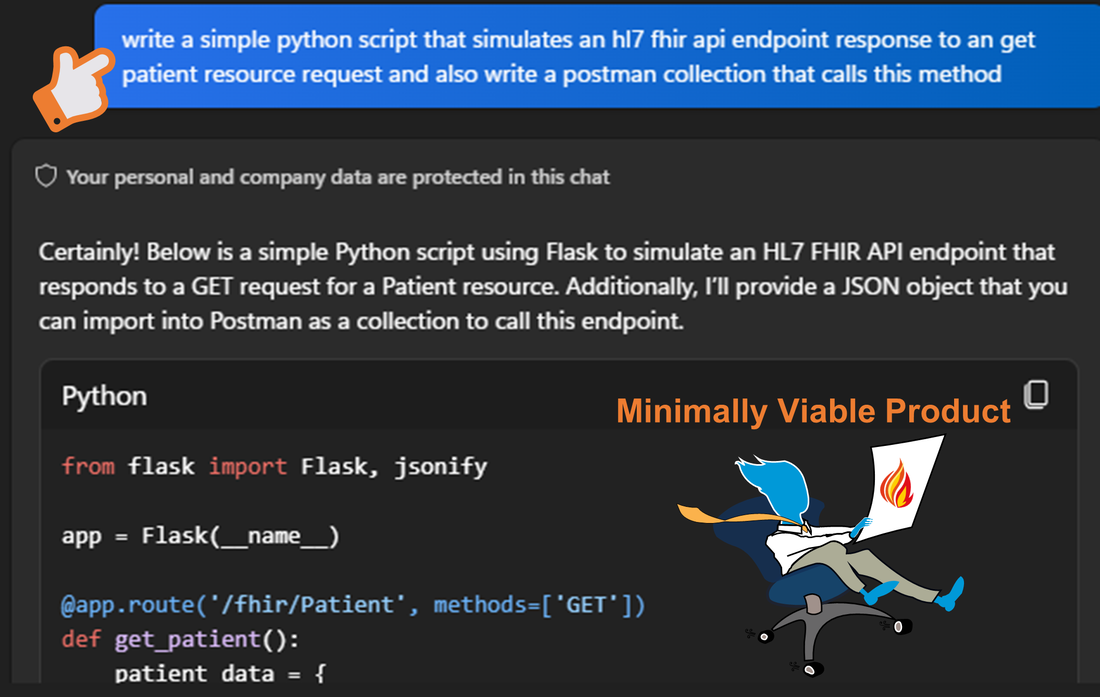
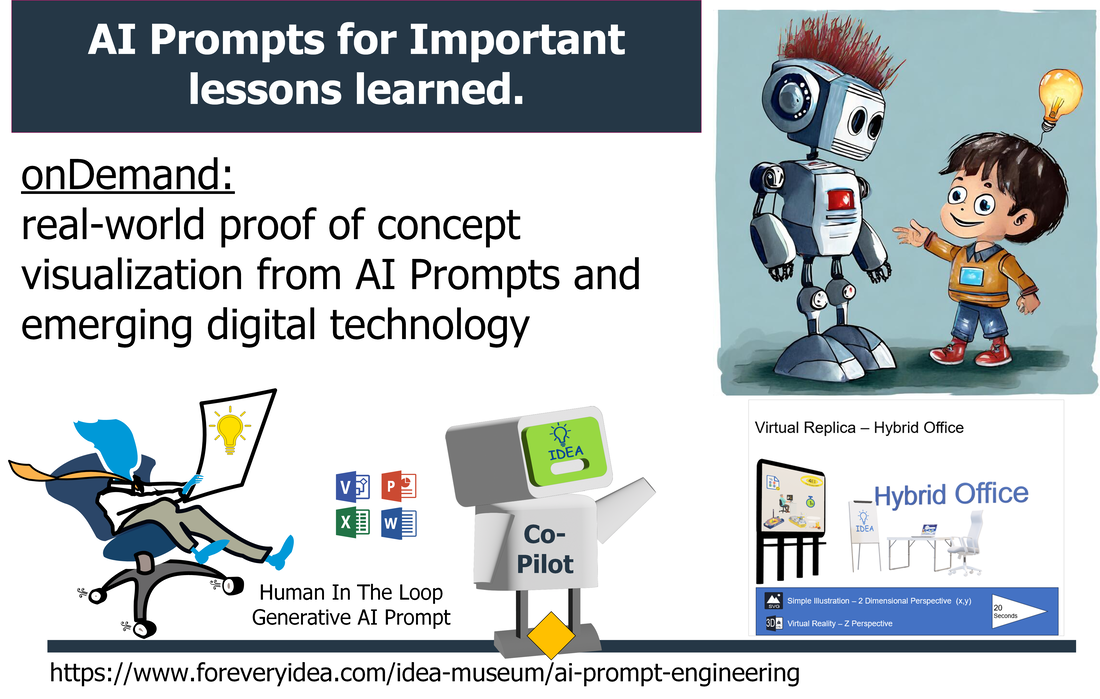
Today’s automation still needs coaching. Not micromanagement—just thoughtful human direction. Near‑Term Reality: Human‑in‑the‑Loop Prompt Engineering Is Essential Professionals who use AI to accelerate early‑stage ideas—especially MVP demonstrations—must embrace a more active role in shaping the prompts themselves. This isn’t about writing “fancy” instructions. It’s about providing:
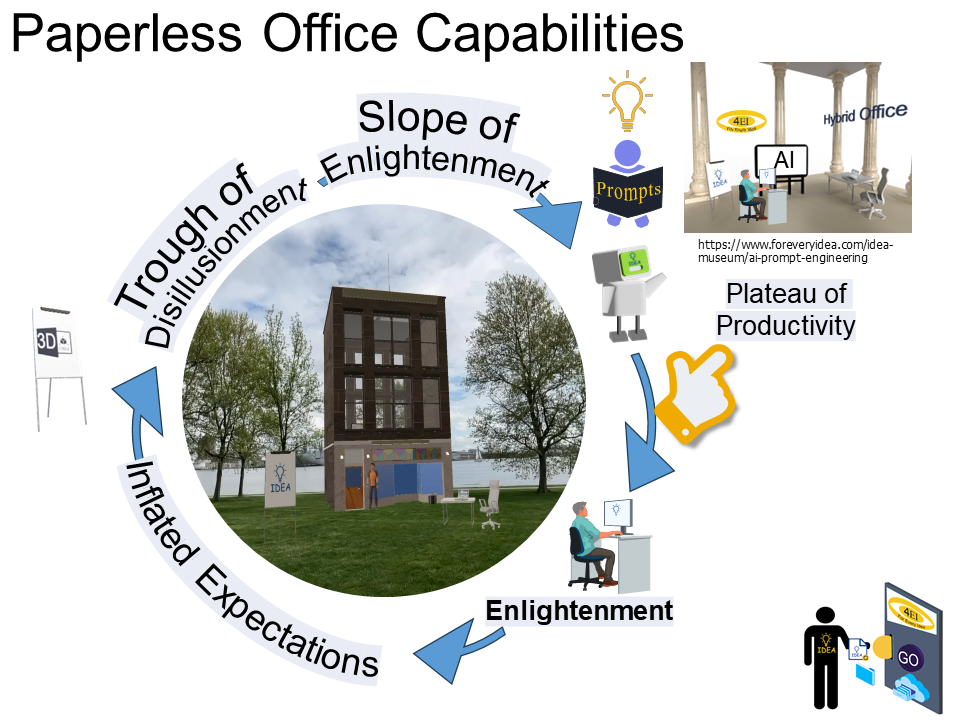
When innovators stay meaningfully in the loop, automated systems stop repeating yesterday’s patterns and start revealing tomorrow’s possibilities. A Process Is Not Always Progress Your link to A Process Is Not Always Progress captures this perfectly. Automation can create the illusion of momentum while quietly reinforcing outdated workflows. True progress requires stepping back and asking:
Final Thought: Innovation Needs Both Sides of the Loop Automation should not replace human intent. Automation should scale human intent. And when combined thoughtfully, the result is not just faster work… but better ideas, clearer thinking, and fewer “Could’ve been an email” moments. If you’re experimenting with AI‑accelerated MVP workflows—or curious about how to avoid an innovation plateau—let’s connect. The future is unfolding fast, and it’s unfolding with us, not instead of us. The Infinite Loop of Familiarity The Progress Paradox: Why We Get Stuck in the "Infinite Staircase"We’ve all been there: hunched over a desk, following a checklist, and checking off boxes with the mechanical precision of a clock. By the end of the day, we are exhausted. We feel like we’ve "worked hard." But when we look at the actual needle of innovation or growth, it hasn't budged. We have fallen into the trap of Continuous Process without Progress. The Siren Song of the RepeatableAs the attached image illustrates through the lens of an Escher-style staircase, it is entirely possible to climb forever and never gain an inch of altitude. Why do we do this?
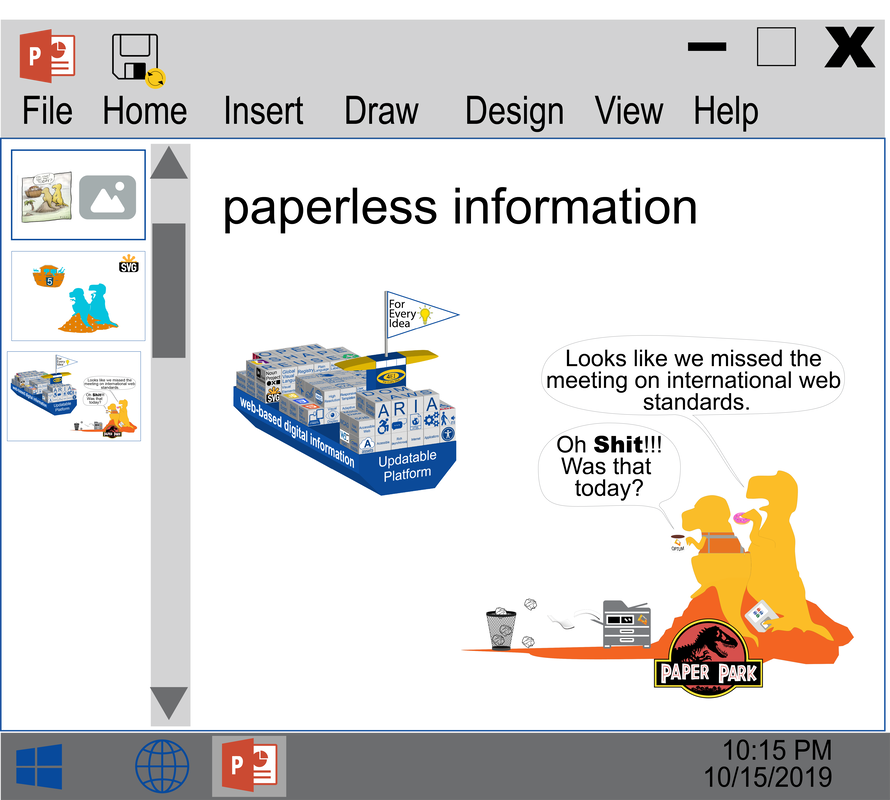
The "Paper Park" Strategy: Innovation Through AnalogyThe image humorously references "Paper Park" and "Jurassic Park." This highlights a vital shortcut for breaking the cycle: Reusing proven concepts to explore new territory. You don’t always have to reinvent the wheel; you just have to put it on a different vehicle. Using a "proven concept" as a framework for a "new idea" provides two major benefits:
The "Loop vs. Leap" Diagnostic Checklist AI Accelerated Improvement 1. The "Default Mode" Test
Proposed Caption"Stop wrestling with 2018 prompts and 'Paper Park' bureaucracy. While some are stuck in the loop of calculating why this project should have been an email, modern professionals are bypassing the manual grind altogether. True efficiency isn't just a better prompt; it's leveraging dynamic, paperless platforms that get things done in under 30 seconds."
The Nudge: Dynamic Scalability vs. Manual EffortTo move beyond the "least amount of effort" and into "exponentially better results," focus on the shift from static prompts to bi-directional behaviors:
Focus on the ability to retroactively update an instruction manual from 2018 ... so that the next person that reads that manual can immediately benefit from the accumulation of lessons learned since 2018 We’ve all been there. You have a simple task to complete—something that should take five minutes. You find the instruction manual, flip to the right page, and follow Step 1.
But Step 1 doesn’t work. The software interface has changed, the hardware has been upgraded, or a critical security patch has rendered the old way obsolete. What was supposed to be a "quick fix" turns into a four-hour archaeological dig through old emails and forum posts. The 2018 ProblemImagine opening a technical manual or a process guide written in 2018. In the world of technology, 2018 might as well be the Stone Age. If that manual is a static PDF or, worse, a printed binder, it is a "dead" document. It contains the best knowledge available at that moment, but it has been blind to every breakthrough, bug fix, and hard-earned lesson learned in the seven years since. When you follow a static document from 2018, you aren't just doing the work; you are repeating the mistakes of the past. You are wasting an afternoon on a problem that someone else likely solved in 2020. The Power of Retroactive ImprovementAt For Every Idea LLC, we believe that information should be as dynamic as the ideas it supports. This is the core of our "Idea Delivery Lifecycle." By moving away from static files and toward modern web-based delivery, we unlock the ability to retroactively update the past. When a team member discovers a shortcut in 2025, they don't just put it in a "Lessons Learned" folder that no one will ever open. They update the source. Because our platforms are built on a live web interface, that 2018 manual isn't a time capsule—it’s an evolving asset. Why This Matters: The Accumulation of WisdomWhen you update a "living" manual, the impact is exponential:
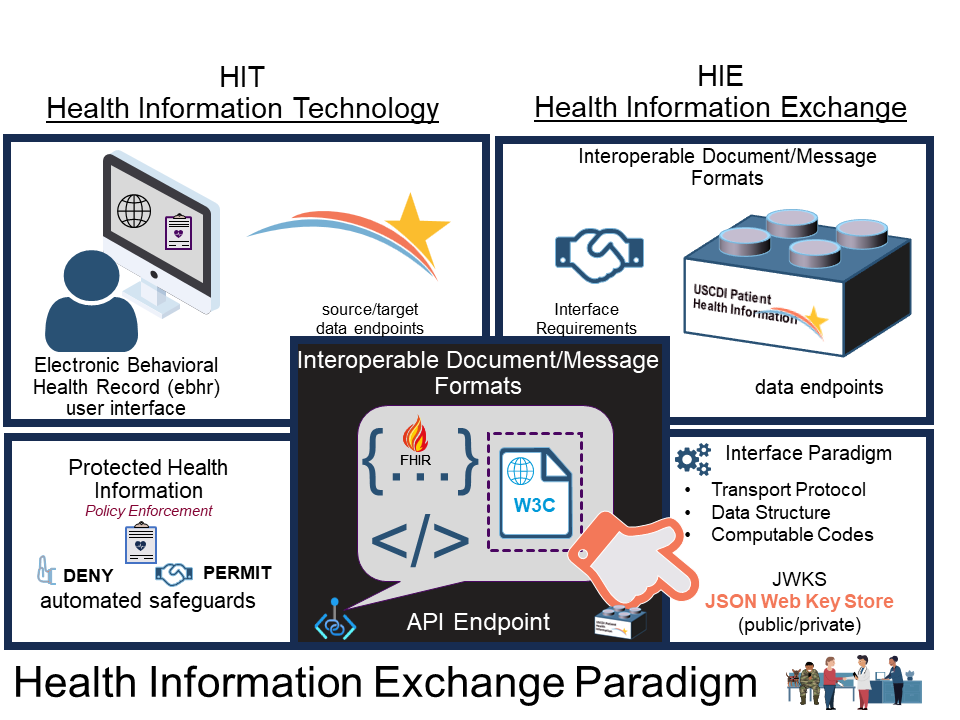
By leveraging the modern web to bridge the gap between 2018 and today, we ensure that our "Idea Museum" isn't just a place for old thoughts—it’s a launchpad for current solutions. We aren't just saving paper; we are saving the most valuable resource an innovator has: Time. The next time you find a "dead" instruction manual, don't just fight through it. Demand a living one. Because your afternoon is too valuable to be hijacked by the past. Ambitious professionals, that aspire to bring a product to market before there is a paying customer, typically need to allocate a side-of-desk approach to this pursuit while sustaining their primary employment. As opportunities arise during breaks in the day, they have a short window to quickly memorialize their idea and build an interested audience. These tiny spurts of ideation about a "potentially viable" product are exciting and successful business founders will enthusiastically hold onto hand scrawled notes that capture their potential viable epiphanies. While it is exciting to see a product vision illustration sketched on the back of a bar coaster, it is critically important that founders avoid distraction and "maximize the amount of work not done" before their product crosses the minimally viable product (MVP) threshold for sustainable project sponsorship. A Minimally Viable Product (MVP) is the simplest version of a product that can be released to begin gathering user feedback and validating market interest. It allows innovators to test core functionality without investing excessive time or resources. This is the reason why our company was founded in 2019 (with a laptop and an exponential idea https://www.foreveryidea.com/about.html), to help ideas quickly gain momentum with "paperless" technology. As with any solution with compounding benefits (such as self-investing financial assets), the initial benefit that our "paperless products" offer may seem unimpressive. Saving a few reams of paper and a couple of hours redoing read-only deliverables may seem insignificant for a project that takes a thousand hours to complete. However, for the moonlighting innovator, every opportunity to save an hour accelerates the delivery of an MVP by a full day. At the time of our founding, we recognized that having the ability to author ideas with dynamic (web-based) digital technology did offer significant advantages over traditional (paper-based) methodologies. However, this simple business with a dynamic web interface for selling made-to-order illustrations and project artifacts is on the cusp of unlocking transformative capabilities. Despite our best efforts and relentless iteration, our Idea Delivery Lifecycle is already delivering measurable efficiency gains, with much more to come. It is not easy to predict exactly how or when advances in technology will suddenly accelerate what we are able to accomplish with our "Idea Delivery Lifecycle" services (https://www.foreveryidea.com/services.html). However, we are already starting to see our web-based business capabilities automatically improve as our web application program interface (API) suddenly become more advanced with emerging Large Language Model capabilities. Our online digital storefront (https://www.foreveryidea.com/contact.html) and public research journal (https://www.foreveryidea.com/idea-museum) are a testament to these sudden improvements. Our contact page (that originally could only request a scheduled phone call) is now a virtual storefront where new customers can casually discuss their needs with an AI powered digital assistant or launch an interactive web-meeting with a dedicated team member. Even more exciting is the AI accelerated possibilities that we are starting to see in our digital sandbox from our previously developed web formatted "Idea Delivery Lifecycle" products. At the press of a button, one of our tailored Retrieval-Augmented Generation (RAG) prompts can produce a relaxed and spontaneous podcast about one of our public research projects (https://www.foreveryidea.com/idea-museum/machine-generated-podcast) and provide the listening audience with relevant industry context. In another project we are exploring the feasibility of adding another step to the idea delivery lifecycle (Idea in a Prompt) where technology projects can accelerate software development with an MVP AI generated solution OnDemand from AI ready software requirements (https://www.foreveryidea.com/idea-museum/model-asset-tag). As we continue to evolve alongside the technologies that shape our digital landscape, For Every Idea LLC remains steadfast in its mission to empower ambitious professionals who pursue innovation in the margins of their day. What began as a simple solution to streamline idea capture has grown into a dynamic platform that leverages cutting-edge AI to accelerate the journey from concept to MVP. While we acknowledge that our current tools are just the beginning, we are energized by the exponential possibilities ahead. With each advancement, we move closer to realizing a future where every idea—no matter how spontaneous or scribbled—can be nurtured, refined, and delivered with unprecedented speed and clarity. We are proud to foster a growing community of innovators, thinkers, and creators who are shaping the future of idea delivery. Our platform is not just a tool—it’s a catalyst for collaboration and transformation. Join us in shaping the next chapter of idea delivery. Explore our Idea Museum, connect with our team, and share your vision. The future is unfolding, and every idea matters. As of 2018, the potential to accomplish big things with AI seemed boundless. In 2025, there are some indicators that AI may be approaching its peak of its comprehension abilities when it comes to unstructured data. It is a different story when it comes to what AI can do with structured (web-based) data. As it pertains to For Every Idea LLC Products and Services, we are starting to accelerate the development of brand new (to us About) digital storefront products and services. We have been relentless in testing different ways to develop AI Prompts with industry standard (machine readable) file formats to deliver minimally viable products onDemand. So far, we have found that machine readable software requirements that are structure with industry standard specification (idea museum API specification model-asset-tag for operational Azure cloud solution) can produce industry standard (oAuth) Secured Web API interfaces. We have of course used AI to make conversational AI explainers about our lean approach to exponential scalability. Our approach is strategically reusable for any web-based technology so that we can implement (on Demand)
|
PortfolioAuthorNot all ideas succeed. Many good ideas often fail in the presence of adversity; however, they always come with some lessons learned. Archives
March 2026
|


RSS Feed